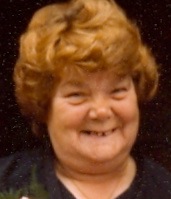
I tell Emma’s story as it was lived in the houses and tenements off Scottie Road, in the wartime blackouts and the post-war clearances, and—most of all—around a busy kitchen where a mother of nine kept a family together with patience, humour, and plates that were always full.
Birth and beginnings
Emma Mary Burke was born on 26 August 1919 in Liverpool, Lancashire. She arrived into a deeply rooted Irish Catholic world—one of those families whose rhythms were tied to parish bells, dock whistles, and the tight bonds of neighbours who were often kin by blood or by marriage.
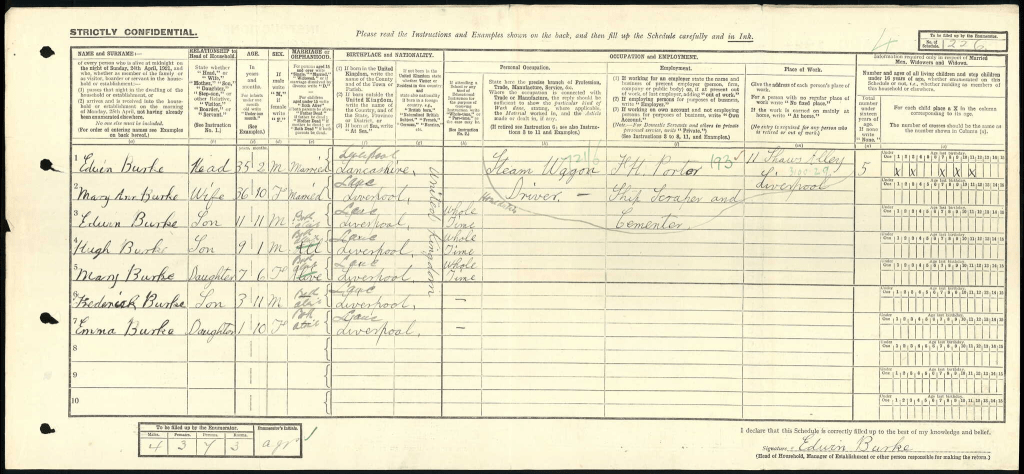
Her parents were Edwin Burke and Mary Ann (McKenna) Burke. By 1921 the Burkes were recorded at 20 Hornby Road in Liverpool’s Scotland Ward: a north-end district that, by the early twentieth century, was almost a city within a city. Streets ran tight as laces, court housing opened onto alleyways, washing lines crossed the air above back entries, and every doorway had a name you’d heard before at baptisms, wakes, and weddings. Emma was then the youngest of five surviving children—Edwin Jr., Hugh, Mary, and Frederick came before her—and she was still a toddler when the census man called.
The world of Scottie Road
To understand Emma’s childhood you have to picture Scotland Road—“Scottie Road” to everyone who lived it. For generations it was the heartland of Liverpool’s Irish community. Politics reflected that identity: the area famously sent Irish Nationalist MP T. P. O’Connor to Westminster from 1885 all the way to 1929. But the real politics of Scottie were in the yards and kitchens: people helped each other when work was short, when illness came, or when a new baby needed christening gowns and a few extra hands.
The physical world around Emma was changing even as she grew. Liverpool Corporation’s early municipal housing programmes were beginning to replace some of the worst courts and cellar dwellings with tenement blocks that, while crowded, brought real improvements—proper sanitation, running water, a little more light. Around Hornby Street and the surrounding roads, these new buildings arrived between 1904 and 1907 and then kept forming a backdrop to family life for decades. It was dense, noisy, and endlessly social. A child learned a fast step, a quick wit, and the names of everyone on the landing.
Coming of age on the brink of war
In the spring of 1939, with Europe on edge and Liverpool about to play a central role in the coming conflict, nineteen-year-old Emma Burke married Edward Christopher (“Eddie”) Roach. Their marriage was registered in the second quarter of the year—one of thousands of Liverpool couples making ordinary, hopeful plans just months before everything changed.
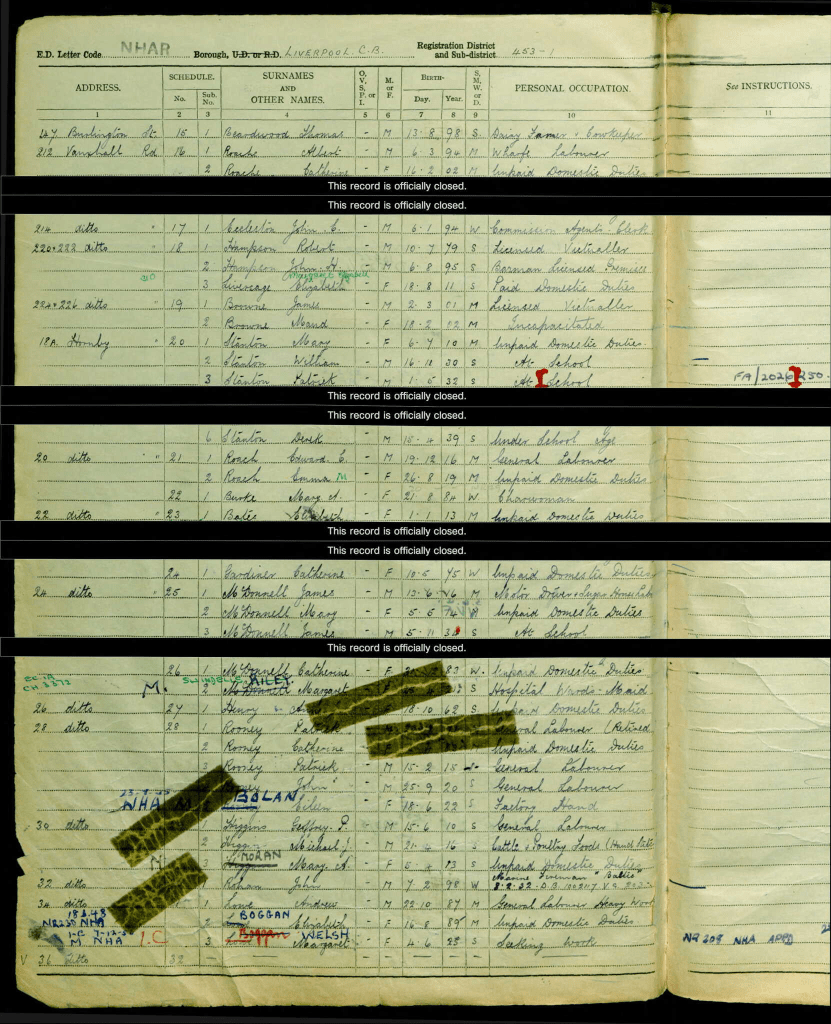
On the 1939 Register, compiled that September, Emma appears as married with her occupation listed as “Unpaid Domestic Duties.” It’s a phrase that hides the labour it describes. In practice, it meant the household’s project manager: the person who budgeted, queued, boiled, scrubbed, mended, soothed, and kept a dozen plates spinning while the world narrowed under blackout curtains and the sirens sounded over the Mersey.
War and the home front
Liverpool endured some of the heaviest bombing outside London during the Blitz of 1940–41. The docks drew the Luftwaffe; the streets around them suffered the consequence. Nights were spent in shelters and cellars, days in queues and on errands, making do under rationing, and keeping a careful tally of who’d been seen and who hadn’t. Although so many official records reduce women’s work to a couple of words, the family memory of this period is often sharper. For Emma, resourcefulness and routine were a kind of armour: the kettles always boiled, the bread was sliced fair, and the younger ones were given chores that made them feel useful and safe.
A mother of nine
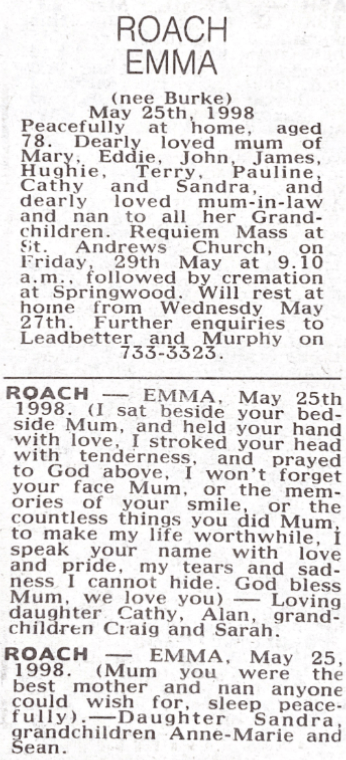
In the decades that followed, Emma and Eddie raised nine children—a family as big as a football side, and every bit as lively. In the wording of obituaries placed later by her children, they are recalled as Mary, Eddie, John, James, Hughie, Terry, Pauline, Cathy, and Sandra. Each name carries its own branch of stories: school photos tucked into frames on the dresser; first jobs and first pay packets; Saturday trips, Mass on Sundays, and the noisy crossings of doorsteps as pals and cousins came and went.
One small, well-loved anecdote says a lot about Emma’s way with a household. She was a wonderful cook—the sort who could turn rations into dinners, and dinners into occasions—but the children remember that she rarely sat to eat with the family. The reason, they say with a smile, is that she tasted constantly while cooking: a spoonful here, a fork there, testing and adjusting until everything was just right. By the time plates were down she’d already had enough. It’s a tiny portrait of a practical woman who made sure everyone else was looked after first.
Post-war Liverpool and moving outward
Liverpool changed radically from the 1950s through the 1970s. Much of the old Scotland Road landscape—tenements and terraces alike—was cleared, and families were moved to the new estates ringing the city. For many, those moves meant better housing and more space, but also a scattering of old neighbourhood ties. By Emma’s later years, the family had its footing in Knowsley, one of the metropolitan boroughs that absorbed and rehoused large numbers of Liverpool families. New houses, new bus routes, new parishes—the old north-end spirit carried outward with the people who made it.
Faith, habit, and the shape of everyday life
Emma’s was a Catholic household, in the unshowy Liverpool style: feast days noted, baptisms prompt, weddings lively, and funerals properly done. Parish life provided the calendar, and the calendar steadied the week. The warm centre of it all was the home: a table where the kids squared up their homework, a cooker that seemed never to cool, a sink that knew its share of shirts on a Monday, and an open door for family.
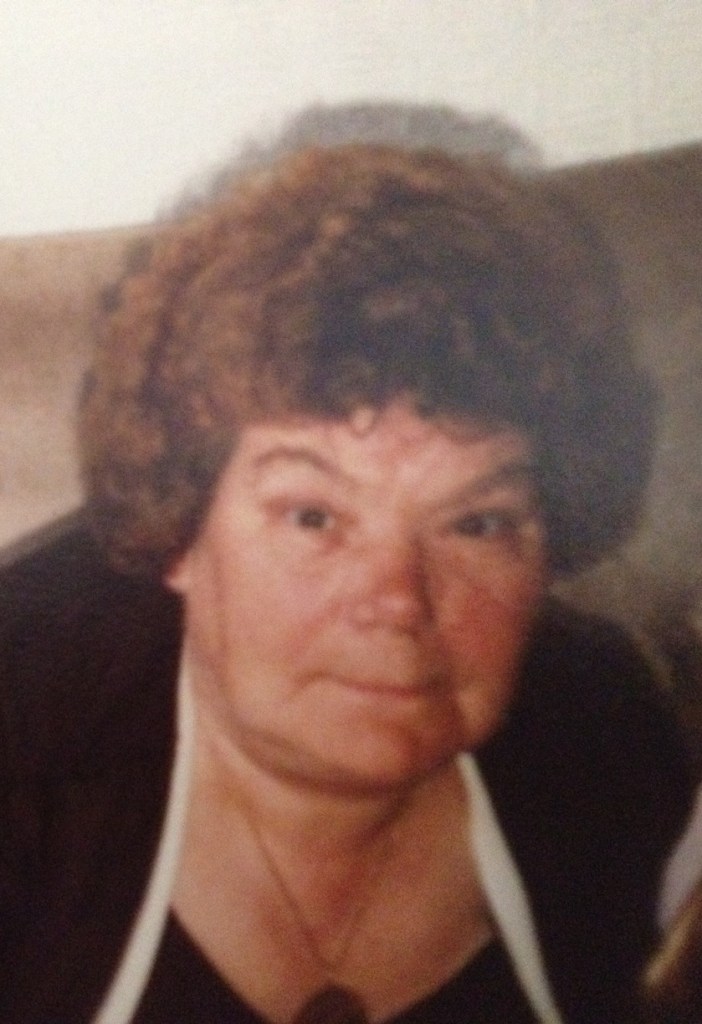
The kindness that people remembered most about Emma wasn’t grand. It was a thousand small decisions—quiet patience with a fussy eater, a bit of money found for a school trip, the way she never made a fuss of her own aches and preferences. Those habits become a family’s culture; they’re how children learn what care looks like when no one is watching.
Farewell and the words her family chose
Emma Mary Roach (née Burke) died peacefully at home on 25 May 1998, aged 78, her death registered in Knowsley. The days that followed were observed with the respect due to a matriarch. Emma rested at home from Wednesday, 27 May. On Friday 29 May, the family gathered for Requiem Mass at St Andrew’s Church, before the committal at Springwood Crematorium—a place familiar to many Liverpool families since the 1970s. The arrangements were handled by Leadbetter & Murphy.
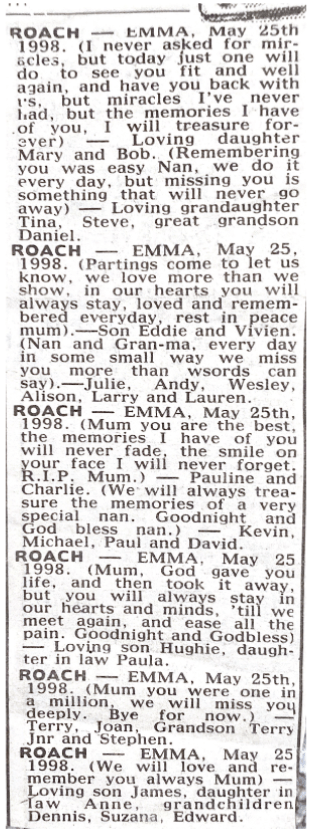
What matters most is always the words the family choose. Emma’s children and grandchildren filled the obituary columns with tributes that repeat certain phrases: “dearly loved mum,” “best mother and nan anyone could wish for,” “one in a million.” One daughter wrote, “Mum, you are the best; the memories I have of you will never fade.” Another promised never to forget “the smile on your face,” and a grandchild captured the plain truth of grief: “Remembering you is easy, Nan; we do it every day. Missing you will never go away.” If you want to know a life’s measure, you can do worse than count the number of people who felt compelled to put love into print.
Context and texture
Emma’s timeline runs through the centre of twentieth-century Liverpool. Born just after the First World War, she grew up in the hungry 1920s and 30s when work faltered and families leaned hard on one another. She married at the very edge of the Second World War, raised babies under the Blitz, and rebuilt a household in the ration years. She watched the old streets vanish under clearance orders, saw the move to the estates beyond the city’s tight waist, and then kept on doing what mothers have always done—turning houses into homes and children into adults.
There is a tendency to tell the story of a city through its ships, strikes, and skylines. All of that matters, but the real city is also this: the invisible infrastructure of women like Emma, whose labour is rarely enumerated but always felt. When a child needed boots or a form filling in, when a husband’s hours changed, when relations arrived at short notice with a bag and a worry—she made the adjustment, smoothed the difficulty, and put the kettle on.
What remains
Legacies aren’t only kept in ledgers. Emma’s is counted in children, grandchildren, and great-grandchildren, in recipes made from memory, in the phrases that have stuck to a family’s speech, and in the easy confidence that comes from having been well loved. The north end of Liverpool that shaped her is largely gone now, but the culture it forged—quick humour, straight talking, fierce loyalty—travels with the people who learned it at their mothers’ tables.
Emma died as she lived—at home, surrounded by family. Her story is a reminder that the hyphen between two dates is where everything happens, and that within everyday lives lie the histories of whole places. If you look closely enough, you can see a city in the way one woman stirred a pot, counted heads, and made sure there was always enough to go round.
Hi Ann-Marie, I’m genuinely sorry that this has upset you. The site is very much a work in progress and…
This is disgusting, as a part of this family it’s incredibly inaccurate. Very jaded and entirely inappropriate you have not…


 Hollingsworth Family History
Leave a comment